
Learn
BDSM Clubs, Dungeons, Munches and Play Parties Explained
Coffee and name tags are not the same invitation as a private play space. Knowing the format lets you arrive calm, respectful and dressed for the actual room.
Last reviewed:
In short
What is the difference between a BDSM club, dungeon, munch and play party?
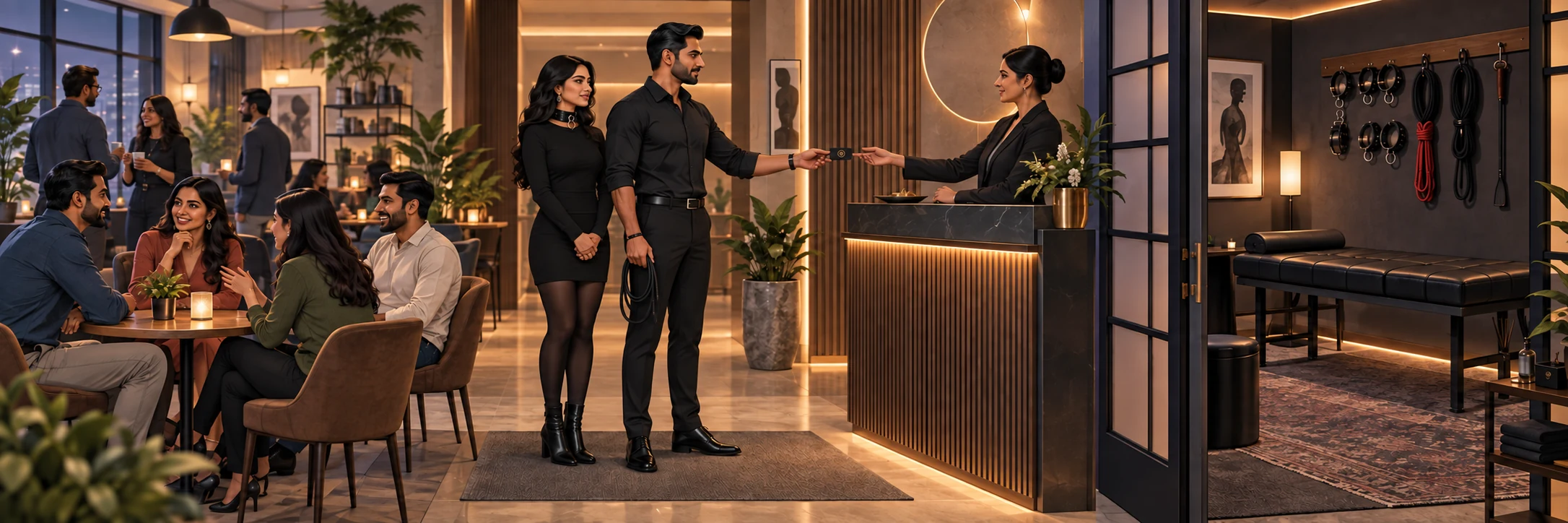
A BDSM club may mean a members’ organization, recurring event or nightlife venue. A dungeon is a designated BDSM play space, permanent or temporary. A munch is usually a casual social meeting in an ordinary public venue where conversation—not play—is the point. A play party is an event where negotiated BDSM scenes may occur; a kink social may sit anywhere between a munch and a themed private gathering. These labels vary by city and organizer, so the current event description and house rules matter more than a generic definition. None of the formats guarantees a date, a partner, privacy or safety simply because you were admitted through the door. As a dominant, I expect a respectful space to make refusal easy, roles irrelevant between strangers and photography rules impossible to misunderstand.
The easiest newcomer mistake is arriving for the event imagined by the label instead of the one actually advertised. Read the listing. Mystery is attractive in a scene; it is less charming in venue policy.
The terms people use for kink spaces are not interchangeable
Community language grew locally, so two organizers may use “club” or “social” differently. Treat every definition here as orientation. The event’s published purpose, entry conditions and rules control your expectations.
What is a BDSM club?
A BDSM club can be a venue, an organization or a recurring event. It may offer only social activity on one night and a play space on another. The word does not tell you whether membership, vetting, dress or play is involved.
What is a BDSM dungeon?
A dungeon is a designated play space. It may exist inside a club or only for one event. Read what a BDSM dungeon is for the full definition, privacy expectations and monitor concept.
What is a BDSM munch?
A munch is commonly a low-pressure social gathering in a café, restaurant or bar, usually in ordinary clothing and without play. It can help adults meet community members, but it is not a dating guarantee, audition or invitation to question strangers about private interests.
What is a play party?
A play party is an event where scenes may occur under house rules. Attendance does not require participation, and visibility does not create consent to touch, photograph, comment or join. Rules about devices, watching and equipment vary.
What about socials, meetups and “BDSM cafes”?
“Social” and “meetup” are broad labels. “BDSM café” may describe a themed event, a casual phrase, a business listing or marketing. Do not infer what happens there. Look for organizer identity, current rules, age limits and a real event description.
Comparison table
| Format | Typical setting | Primary expectation |
|---|---|---|
| Munch | Ordinary public venue | Conversation and community |
| Kink social | Public or private social space | Conversation, education or themed gathering |
| Club | Venue, group or recurring event | Varies substantially |
| Dungeon | Dedicated or temporary play space | Space for negotiated scenes |
| Play party | Private or ticketed event | Scenes may occur; participation is optional |
The event listing matters more than the label
What I expect from a respectful space
Clear rules, visible accountability, no pressure to play, calm acceptance of no, and a way to raise a concern. I do not find insider mystery impressive. New adults should be able to understand the room without surrendering personal information or dignity.
A munch is not a dating guarantee
You may make friends or meet a compatible person, but nobody owes attention because you attended. If connection is your main question, read how to find like-minded adults in India and keep community spaces separate from matchmaking fantasies.
Privacy in India and Delhi
How this relates to “BDSM near me”
This page owns definitions. Local discovery belongs to BDSM near me, BDSM community India and the Delhi, Mumbai and Bengaluru guides. Those pages help you evaluate discovery; none publishes an invented venue list.
Common newcomer mistakes
Assuming all clubs allow play, treating a munch as a pickup event, touching gear without asking, using titles with strangers, sharing photographs, or believing attendance proves experience. Read BDSM etiquette and remember that consent remains individual.
Choose the format that matches your actual aim. If you want to understand vocabulary and meet people without pressure, a public social setting may feel more sensible than an event where scenes are possible. If you are curious about a dungeon, learn the house rules first rather than treating the room as a shortcut to intimacy. The slower choice can be the more confident one.
A respectful organizer makes expectations easy to find: who can attend, whether guests need to register, what privacy rules apply, how concerns are handled, and whether observers are welcome. Vague exclusivity is not sophistication. I take clear communication as a sign that a group understands the responsibility of bringing strangers into a sensitive space.
At any community event, give people room to introduce themselves on their own terms. Do not ask why they are there, what they do privately, whether they are “really” dominant or submissive, or whether they will connect with you after the event. A warm hello and ordinary conversation go much further than a performance of insider knowledge. Attraction and trust need time, particularly where privacy is at stake.
For Indian adults, public discretion may matter as much as community warmth. Use a name you are comfortable sharing, review what your social profile reveals, and never assume a café, bar, or hotel event is invisible to colleagues or family friends. You can protect your boundaries without becoming suspicious of everyone. Good community practice makes that caution normal.
If a space pressures you to drink, share identifying details, play, pay unexpectedly, or ignore an uneasy feeling, leave. The label “club” does not create credibility. The right room will still be there after you have read, considered, and decided freely.
Going with a friend can make a first social event easier, but each of you should retain your own choice about conversations, disclosure, and when to leave. Do not use a companion as a reason to pressure someone else into introducing you or sharing their private interests. The best community etiquette is patient enough to let trust develop at the speed each adult chooses.
Before you attend, decide what a successful evening would look like. It might simply mean learning the difference between a munch and a play party, having one respectful conversation, or discovering that this particular format is not for you. That modest expectation protects you from treating community attendance as a promise of romance, a partner, or immediate belonging.
Organisers may change venues, access rules, or device policies, so use the current announcement rather than a repost. A local label can conceal major differences in atmosphere and accountability. Ask a direct practical question if you need one answered; a serious host will not make you feel foolish for wanting to understand the room before you enter it.
You can leave a social event having met nobody you want to see again and still have used the evening well. You learned the room, protected your privacy, and practised being present without making a promise. Community is not a performance review. Let a connection grow through repeated respectful contact, not a demand for instant chemistry.
If you go as a submissive, nobody there automatically becomes your dominant. If you go as a dominant, nobody there owes you deference. Those simple truths prevent a great deal of awkwardness. Roles become meaningful through direct agreement, not through a label on a profile or an assumption made across a café table.
Be considerate of the people who make an event possible. Follow the stated rules, do not pressure organizers for private information about attendees, and report a concern through the route they provide. You can be warm without being invasive. A reliable community is built from many small choices to respect one another when nobody is trying to impress anyone.
Think of the club label as a starting point for questions, not an answer. One club may be a long-running members’ group with education and clear protocols; another may be a themed nightlife event using kink language loosely. Ask what happens at this particular date, whether newcomers may attend, and what hosts expect from guests. The answer helps you decide whether the setting suits your appetite for community, learning, or simply a careful first conversation.
A good munch lets you remain an ordinary adult with private boundaries. You can talk about work, films, traffic, books, or a question about terminology; you do not owe anyone your history, photos, role, or contact details. If you are submissive, nobody gains authority because you joined the table. If you are dominant, warmth is more persuasive than a performance of command. Let conversation earn its own pace, particularly when someone is protecting discretion in an Indian city.
A scene at a play party is still a private agreement taking place in a shared setting. The people involved may be using protocol, service, restraint, impact toys, or simply a quiet exchange of authority; none of that turns them into entertainment. Keep your own attention to yourself unless invited, and let a monitor guide you if you have a practical question. The most attractive confidence is the confidence to respect a boundary without needing an explanation.
Read for what is absent as well as what is promised. A listing that never identifies a host, gives no practical contact route, or treats privacy as an afterthought may not offer enough information for a cautious decision. You do not need to invent danger to choose patience. Ask one clear question, wait for a respectful answer, and keep your plans independent until the format is genuinely understood. A sincere organizer knows that trust begins before the door opens.
I also expect leaders and regulars to remember the influence they carry. An experienced dominant, host, or familiar face can make a newcomer feel welcomed or cornered with a few sentences. Explain without recruiting, offer without insisting, and accept a boundary without turning cold. In a healthy space, status never becomes a shortcut around negotiation. That is how a person curious about submission can feel intrigued without feeling claimed by a stranger.
Connection can still be a lovely outcome when it develops honestly. Speak to one person because the conversation feels easy, not because their collar, profile, or apparent role looks like an invitation. If there is mutual interest, let the next step be small and explicit: a message, another coffee, or a conversation about values. I would rather build anticipation through steady respect than rush someone into a hierarchy they have not chosen.
In practice, city context changes what a sensible first step looks like. A café gathering in Delhi may be convenient but socially visible; a private ticketed event may feel more discreet while requiring more verification. Mumbai and Bengaluru have their own rhythms, travel distances, and overlapping circles. Treat local discovery as a decision about privacy and comfort, not a race to find the most dramatic room. Current organizer information outranks an old post or a confident stranger.
Another common mistake is treating nerves as something to conquer by saying yes too quickly. You can attend in ordinary clothes, keep your first visit short, decline alcohol, avoid sharing a home address, and leave without giving anyone a reason. Those choices do not make you timid. They make your yes more meaningful when you offer it. The right community understands that power exchange begins with a free adult choice, not social pressure.
Give yourself permission to come home, think, and change your mind. A memorable room, a charming dominant, or a beautifully arranged dungeon can awaken real desire, but desire does not cancel the value of a slower conversation. If you later explore a dynamic, negotiate protocols, safewords, privacy, and aftercare directly with the person involved. A venue can introduce people; it cannot do the intimate work of building trust for them.
Before you meet anyone again, separate attraction from access. A person may seem knowledgeable about dominance, bondage, Shibari, harnesses, or formal protocol and still be a stranger. Keep early plans public or independently reachable if that is what you need, use a name you are comfortable sharing, and do not let flattering attention hurry your disclosures. The most reassuring response to a boundary is ease. That ease tells you far more about someone’s character than a polished profile or a dramatic claim of experience.
When a community event feels promising, return because the culture was respectful, not because you fear missing a chance. A real connection can survive a slow reply, a changed plan, or an evening spent only observing. This patience is especially valuable when work, family, and social circles overlap. It lets desire stay warm and playful while your practical safety remains entirely your own. The adult who respects that pace is far more interesting than anyone who demands instant access to your time or submission.
Want to introduce yourself privately?
If something on this page felt like you, you can write to me directly. Connect is a private introduction to the Delhi-based Dominant behind this site, not a public dating app, paid service or reader-to-reader matching platform.
Sources
Wikipedia contributors — Munch (BDSM)
Supports: Current orientation to munches as casual social gatherings and their distinction from play events.
Consent Culture — What is a munch versus a play party?
Supports: Independent community-education comparison of two event formats; local rules still control.
National Coalition for Sexual Freedom — Consent Counts: Statement and glossary
Supports: Consent, negotiation, D/s and scene terminology used as a baseline across this batch.